
Behind every great creative project is a team of talented individuals who bring it to life. At Ambassadors, we're proud to work with an incredible team of artists each bringing their own creativity, expertise, and passion to what we do. In this series, we're taking you behind the scenes to showcase the people behind the craft. Today we're catching up with Sil Bulterman, our VFX Supervisor and Head of Nuke.
Who are you and what do you do?
I'm Sil, VFX supervisor and compositor, I'm heading the Nuke team at Ambassadors, and I've been here for over ten years now.
How did you get your start in VFX?
I've always had many different creative hobbies and decided to study multimedia, as it gave me lots of different options to develop toward. I initially focused on the video branch, but it turned out to be more geared toward TV production. The CG visualisation branch introduced me to some interesting technologies but it was mainly focused on architectural visualisation. I realized I was more interested in combining both technologies which led me to explore VFX during my studies. I began with After Effects and soon delved into Nuke as well.
I freelanced for a couple of years as a VFX generalist with a focus on compositing, until I did a job for Ambassadors as a freelance shoot supervisor. And they haven’t managed to get rid of me since.
Where do you look for inspiration? Who or what inspires you?
Inspiration comes from many places. Whether it's photography, learning to see the world around us through a lens, watching old movies, or just playing around with new technologies. The key is to stay curious and keep messing around. A lot.
I also love watching breakdowns, behind-the-scenes, and interviews with creators; whether they are VFX artists, directors, cinematographers. Hearing about the problems they run into and how they work around them is really inspiring.
What’s been your biggest learning in your career so far?
We truly work in a service industry, and there rarely is a straight line to the finish line. Communicating with clients, both understanding what they want and clearly explaining our technical approaches and limitations, is critically important. You have to be able to speak two completely different languages when talking between clients, creatives, and the artists who bring the work to life.
What do you enjoy most about your job?
I love how varied it can be. I like that it requires being both creative but also extremely technical. Since it's a technology-driven industry, you're constantly learning and staying up to date, which means you're always developing yourself."
Also working with people from all over the world, coming together to create something in a short, intense timeframe, is quite amazing. Being involved from start to finish makes the experience especially rewarding. The intensity and variety that short form advertising brings keeps things interesting. Every job comes with its own unique challenges to overcome, and problems to solve.
What project or piece of work are you most proud of and why?
I'm really proud of the work we did for the ASN Bank forest series. Instead of a straightforward animation, we took a photographic approach, rooted in a physical world. By combining the strengths of our VFX, design, and animation teams, we created something that feels quite uniquely Ambassadors.
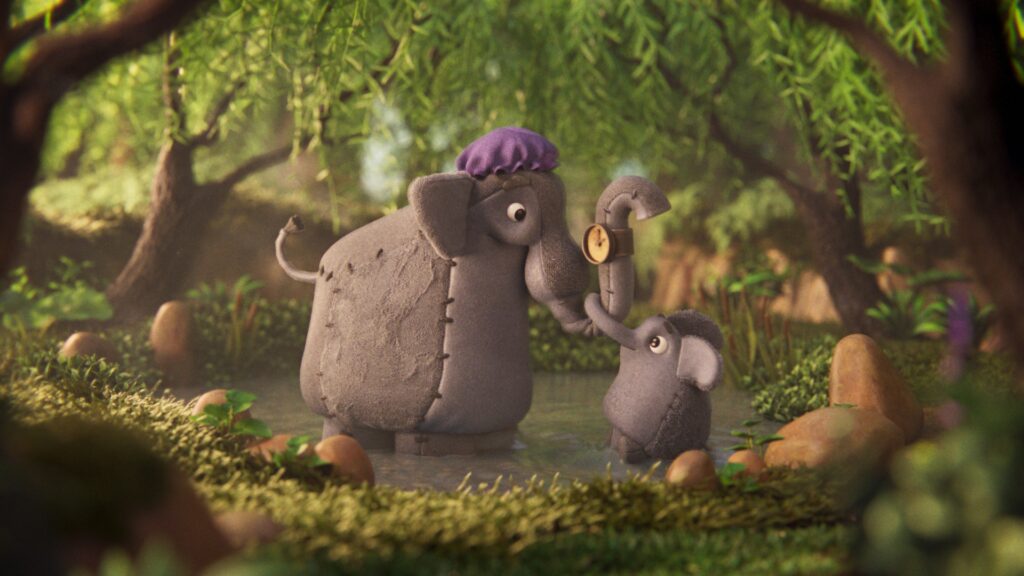
ASN Bank, Green Intentions, 2023
Is there a project that you wish you’d worked on?
Early in my career I saw this Cadbury ad featuring a thrift shop after closing time, where the clothes came to life and started dancing. It was mostly done in camera, with only subtle digital cleanups, executed in such a clever and fun way. That ad inspired me to pursue more short-form commercial work.
I love it when things are done cleverly in camera, tricking the eye. Visual effects aren’t new, they’ve been part of filmmaking since the very beginning. From pioneers like George Méliès to modern visionaries like Michel Gondry and Spike Jonze, filmmakers have always used creative techniques to capture what’s impossible in real life. Today, computers are just another tool in that tradition. But the technical limitations they faced more than a century ago didn’t hold the old filmmakers back. Instead, the challenges made them even more creative.
How do you think the creative industry will change over the coming months/years? What are you most excited about?
Being a technology-driven industry, it has always been a changing one. It looks completely different now compared to when I first started. With modern machine learning and AI tools, that pace of change is accelerating even faster.
On one hand, this strengthens the race to the bottom, making it easier and cheaper to produce more content. Nowadays, the average commercial often has more digital effects shots than the biggest Hollywood blockbusters did when I was young. And that trend shows no signs of slowing down. AI tools can reduce costs and increase the amount of work we can do in the same amount of time.
But the more interesting part is that technologies allow us to do things that were once unimaginable. Creating realistic human beings for example, or creating fully synthetic photo realistic imagery. I like how it's already helping us speed up the mundane day to day tasks, giving us more time to really refine our work, pushing it to higher levels. The bar keeps rising, and that’s what makes the future so exciting.

