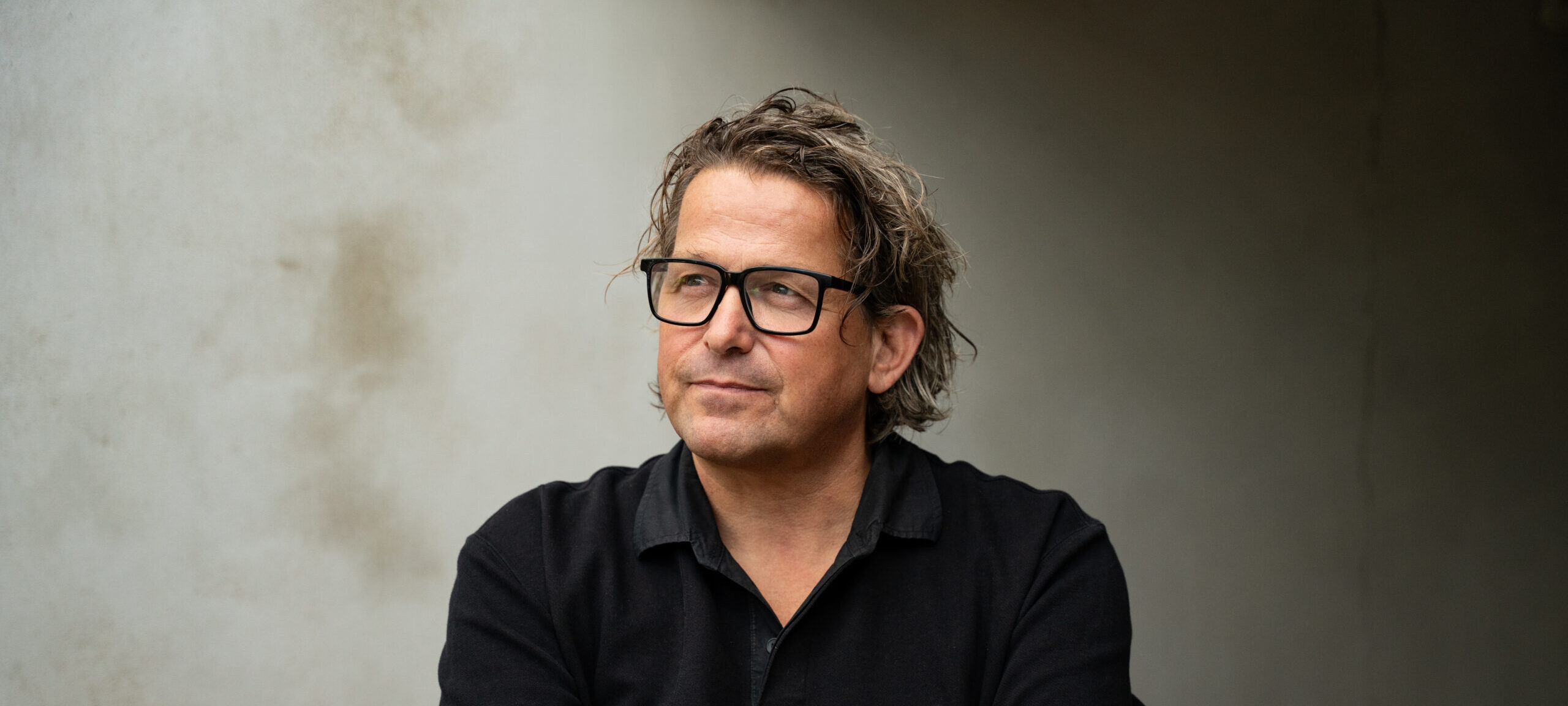
Halbo van der Klaauw, Co-founder and CEO of Ambassadors.
We all want to make that one film, the one that truly lands. The kind that takes you to Cannes or other festivals, or perhaps an old-fashioned Super Bowl spot. I still want to shoot something on 35mm or even 70mm, make it the way Nolan does, then sit in a dark room and feel the whole thing work. I have wanted that throughout my career, and I am not going to pretend otherwise. So while I know that our industry has to change, and that we have to change with it, some days I am simply tired of talking about transitions. I got into this because I wanted to make things.
After a pitch last week, a client said something I have not stopped thinking about. "Your creative thinking stands out, but you're not letting go of the things that make you you."
He meant it as a compliment, but it stayed with me for another reason. I think it points to something most of us are getting wrong right now. Everyone I talk to wants to know what they should be changing, while I keep thinking about it the other way around: what are we not going to touch?
We have changed almost everything: our pipeline, our tooling, our cost structure, the way a job moves through the building, who touches it, and when the machine takes over, or a human has to step in and say, "No, not like that." We changed the machinery so we could protect the part people are actually paying for. That includes the craft, the instinct that tells you even though a shot may be technically finished, it is creatively dead. It also means running a tight production, being transparent about the finances, speaking honestly with people, and simply being good to work with. All of that may sound obvious now, but it wasn't so obvious when we started.
It helped that we started building with AI in 2020, two years before anyone had heard of ChatGPT. We had no grand prediction about where it was heading. We simply looked at the technology and thought, "Hm, this might turn into something." That was the whole thesis, and little did we know where it would lead. What those early years gave us was time to be wrong in private, to test things, make mistakes, and figure out what was actually useful before clients started expecting us to have the answers.
Anyone presenting this transition as clean or straightforward is selling you a simplified version of what happened. Ours was messy in the middle, and we figured most of it out while the work continued going out the door. We had to, because clients do not pause while you rebuild the way you deliver their work.
And we are not there yet. Clients want AI, they want it cheaper and faster, and we are still learning how to hold the line while giving them that. We got it wrong recently. We were pushed hard toward AI on a job, and we did not push back hard enough. The film went out. It is fine. It is not good, and we know the difference. That one is on us, not on the client. They asked, and we should have said no, not like that.
This brings me back to that one film. It still exists, although today it is a case rather than a business, and even that film has to be thought through far more cleverly than it did two years ago. We used to think about the idea first and consider how it would travel afterward, but we can no longer afford to separate those questions.
That film does not go to one place. It has to go through ten different platforms, each with its own logic, and eight markets, each with its own reference points. Gen Z, Gen Alpha, and whoever comes after them may all read the same frame completely differently. This cannot be treated as a versioning problem to solve at the end. It has to inform the thinking from the beginning. Get it right, and the idea is stronger everywhere it lands. Get it wrong, and you have a beautiful film and a pile of bad translations.
That means the craft has moved too. You can only conceive something properly if you know how it will be built and where it needs to travel. Strategy, craft and technology in the same room, arguing, on the same day. The ground continues to move, and, eventually, it moves under everyone.
Which brings me to the part I did not see coming. I expected AI to make big brands nervous about working with us, but, in reality, it did the opposite. Big international brands always wanted more work delivered faster, and there used to be understandable hesitation about whether a company our size could carry that responsibility. At the time, producing at that level required a lot of people in many places.
That hesitation is now gone. We now run worldwide campaigns for multiple brands with a small team on our side and a small team on theirs, working across every level and every market throughout EMEA and beyond. Nobody asks how big we are anymore. They ask what we can do.
Automation alone did not make that possible. You do not hand your brand to a small team unless you trust the thinking behind it, and that trust is not built by tools. The future is not a choice between craft and technology. It depends on knowing what can be automated and what deserves human judgment. If you change everything, you risk having nothing left worth trusting. If you change nothing, you will eventually disappear.
I still want to make that one film. I still want the dark room, the 70mm, the moment when everyone goes quiet because you know it works. None of this changed that.
What changed is everything around it. And perhaps that is the point.
You do not protect craft by holding on to the way you have always made things. You protect it by changing everything you can and building what does not yet exist, so you do not have to compromise on the things that matter.
I can live with that.

